This blog is approaching its first birthday (I penned the first entry I believe on Sept. 1, 2012). It gets some traffic but not a whole lot. Obviously, this being a heavy-duty intellectual blog, it is in no position to compete for attention with far better known (and better supported) mainstream sites or even blogs dealing with popular topics such as Lady Gaga's wardrobe catastrophes. It isn't just that, however. I'd be the first to admit: I'm not a great self-promoter. I hope to learn more in the near future that will help, but that's another story.
Given that this site doesn't generate huge amounts of traffic, has as its purpose something fairly obscure -- developing a relatively new way of thinking about the future, under the assumption that the future is going to come and so it might be a good idea to think about it in the present -- and it doesn't sell anything or attempt to do so, and so doesn't make any money for its author (donations have amounted to less than $25 to date), why bother? Why not just do what I'd been doing, and work the ideas into articles posted online?
In response, let me tell you about one of my favorite online essays, "Isaiah's Job" by U.S. author Albert Jay Nock. In a very recent conversation at Exosphere, I told two of its leaders that this essay saved my writing career twice. I meant that. I was ready to hang it up back in 1997. Then I discovered "Isaiah's Job." Its powerful ideas came as a shot in the arm. Due to my not having found a publisher for a book manuscript I'd written on the deterioration of logical and critical thinking in our time, and to frustration with having to work at a job that made no use of my actual strengths, I was ready to throw in the towel again in 2004. Again I ran across "Isaiah's Job" and gave it a careful rereading. I thought, okay, why not get into one place, in one concise package, what I've learned about the rise to power of the Western power elite and its efforts to establish world government? And if nothing happens, that's it! Since The Matrix was still fairly recent, and its themes coincided with mine, I had a hook to leverage. I began with some well-known dialogue about "taking the red pill." I circulated the 28-page manuscript, and ended up with an essay published in seven parts entitled "The Real Matrix."
Of everything I've written, this one came the closest to going viral online.
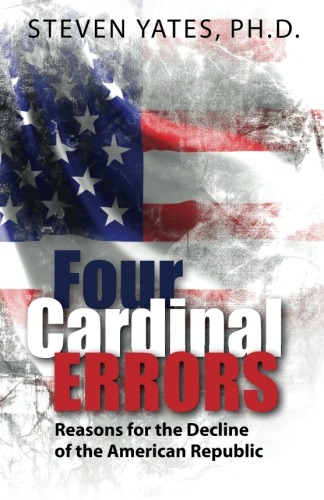
Within 24 hours I'd received over 500 emails--all but a couple positive. A handful noted that I'd left this or that out. It is a failing of "The Real Matrix" that it doesn't do enough to discuss the rise of the Rothschild family or say anything about the operations of the City of London based Fabian Society to shift the English-speaking world leftward. So it doesn't fully connect the dots, in terms of the formation of the natural alliance between the Fabians and the global financial elite, forming what I call the superelite, in the early 20th century. Because of the problems I turned down an opportunity to have a print edition published and went back into the manuscript to fix these things. It began expanding, eventually turning into something so long and unwieldy that I was sure no one would read it (we're talking about well over 400,000 words!). So I scrapped that project and began something more manageable that eventually evolved into Four Cardinal Errors: Reasons for the Decline of the American Republic.
Without "Isaiah's Job" I am sure I wouldn't have accomplished anything further as a writer. So what was in this essay that was so important?
Nock's reference was to Isaiah 1: 1-9. The time was near the end of King Uzziah's reign (around 740 B.C.). The people had turned away from the Lord, and the Lord had commanded Isaiah to preach to them, telling them what a worthless lot they are, that if they do not get their act together they will get what's coming to them. Oh, and of course, they won't listen, and you'll be lucky if you get out with your scalp intact. Isaiah's question to the Lord was the same: then why bother?
You do not understand, the Lord told Isaiah (I am paraphrasing, of course). There is a Remnant out there you know nothing about. You do not know who they are or where; they operate invisibly, unlike a king or politician or celebrity. They work competently and diligently at whatever it is they are doing. They've discovered how to leverage their strengths no matter how hostile their environment. They were the ones that built civilization in the first place; and when everything goes to pieces, they are the ones that will build up a new civilization.
You are preaching to the Remnant, the Lord tells Isaiah (1:9 is the key verse). Your job is to encourage them, shore them up, motivate them to keep trudging along. In the present environment you only know two things about them: that they exist, and that if you do your best, they will find you. But if you compromise, and water down the best you have to offer, they will smell a rat and head the other way. Message: while doing whatever it is you do to make sure you can eat, pay the mortgage, keep the lights on, etc., have at least one written product that does not compromise itself. For me, that is this blog.
Taking care of the Remnant: that's the best job description available for what the Lord had told Isaiah to do, and it's what he did. And so this is what this and any similar blogs are about. We are not writing for the masses, but for those who have it in them to take Western civilization into a Fifth Stage ... shaping its exact nature not through defunct efforts at central planning but as they go along, building from the bottom up, amidst the chaotic and deteriorating present.
That reminds me:
A book recently brought to my attention (within the last 24 hours, in fact) that looks very much worth reading is Nassim Nicholas Taleb's latest effort, entitled Antifragile: Things That Gain From Disorder. I could wait, as I've only read the introductory matter and part of the first chapter, but what I've read is a truly phenomenal, mind-altering package! This is definitely Fifth Stage of Civilization material!
Taleb is best known, of course, for his The Black Swan: The Impact of the Highly Improbable, which makes the point forcefully that we don't know as much as we think we do; generalizations about complex states of affairs in the world will inevitably be disrupted by Black Swan events that (1) were not predicted, at least not by most of us, and (2) have enormous consequences.
What I've read of the new book begins the compelling case that fragile systems are those in which everything is predictable but which are easily disrupted and even destroyed by the unpredictable and chaotic. Antifragile systems, on the other hand, thrive and grow in environments of unpredictability and chaos; they can withstand disruptive influences by absorbing and incorporating them. The equivalent notions in systems theory hold that systems can become too ossified or rigid; or they can become flexible and learning. The former are easily perturbed and sometimes cannot respond effectively to challenges from their environment; the latter either have structural defense mechanisms to ward off such challenges or the built-in capacity to withstand or absorb them or incorporate them as part of a systemic change.
I am not in a position yet to develop more fully the ideas behind Antifragile, but I suspect strongly that Antifragility -- becoming Antifragile -- is going to be a key to taking civilization consciously into its Fifth Stage and then not just surviving but thriving at that level. There are people and institutions that are already there. What is worrisome is -- as usual -- the masses. They are not ready, for reasons that vary from case to case. Some will pay dearly for their inattention to the breakdowns going on all around them: the deterioration of the job market which is no longer producing sources of long-term viable income, the deterioration of the culture which is all about mass consumption for instant gratification (i.e., short-term thinking), and the deterioration of the political system which is becoming more thieving, more violent, and less responsive. All of these are fragile systems. What emerges very clearly from the situation with the deteriorating job market is that to be employed, or to seek standard employment, is to be fragile. To work towards self-employment is to work towards becoming Antifragile. That's the personal level; what about the civilizational? The idea here is that to build the future it is necessary to encourage a Remnant that can operate outside the first two and will instinctively avoid the third as much as possible until the financial and political systems' lack of sustainability leads to their inevitable collapse. The collapse will, of course, be the collapse of Stages Three and Four. We will hopefully have learned from these stages which had their strong suits even if their weaknesses finally did them in (see previous entries for the details).
We must, in this case, write for the Remnant, some of whom have probably gone into survival mode and perhaps have become Antifragile without knowing it, and we must work to become Antifragile ourselves. Otherwise, as also noted in a previous entry, there is no guarantee that a Fifth Stage of Civilization will happen. What will happen instead is a techno-feudalism which will continue to draw upon Stage Three and Stage Four thinking. This being an exercise in futility, standards of living will drop everywhere, leading to a new dark age from which it could take the human race centuries to recover, if it ever does.
These themes thus continue to be important whatever the size, scope and composition of their present readership. I do not know, and so am not making any predictions, about how things will turn out. As I have at most 35 years left in this world, I will probably not live to see how everything plays out. But as we said at the outset, the future will come, and it is up to us, prayerfully, to do the work to make it better than our war-torn and impoverished past and present. Although we can say that it's all in God's hands, I am sure that as with Isaiah, He doesn't expect us to sit on our butts. That we can rise to the occasion and do what needs to be done continues to be my hope.
________________________________________________________________________ Steven Yates is the author of Four Cardinal Errors: Reasons for the Decline of the American Republic (Spartanburg, SC: Brush Fire Press International, 2011) and numerous articles in both refereed academic journals and online. Read the Introduction and part of Chapter One of Four Cardinal Errors here. Order your copy by following the link to the Amazon page.
________________________________________________________________________
This blog has no means of support other than its author's personal resources and donations. If you've read to the end and believe these ideas are worth supporting, please consider making a donation.
